





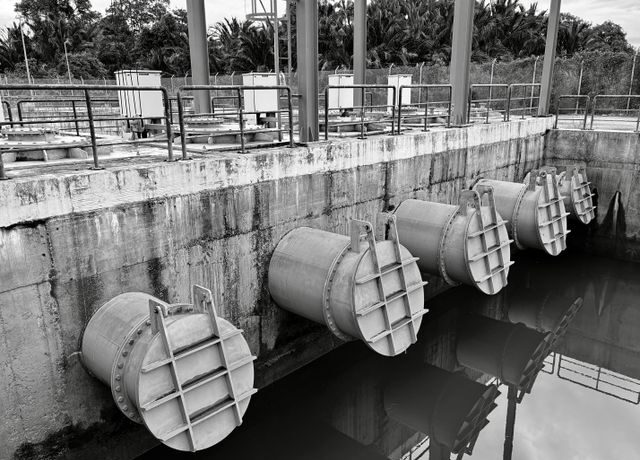
Alternative pipe materials have made some serious strides over the past 20 years. Thermoplastics have expanded into new areas; the techniques for joining them have improved, and the marketing push for steel alternatives has never been stronger. However, still in Australia’s high-pressure transmission mains, those long water chains, and projects that require all sorts of geological stability, steel just won’t go away. It’s not because people are being too conservative. The thing is, other materials just still can’t match up to steel’s special set of engineering features when faced with all the different conditions that water projects in Australia come up against.
Pressure Capacity Where It Really Counts
The high-pressure transmission mains that have to deal with being pressurised right up to the max need walls that can handle the shock of those sudden jolts from valves opening and closing or pumps just cutting out. Mild steel pipe wall thickness can be worked out to match the operating pressures exactly, not relying on some limited set of standard classes that might not be right for the job. Rubber ring joint water pipes can also provide a practical solution where flexible, reliable connections are required: https://www.steelmains.com/rubber_ring_joint_water_pipes.
But those big mains can get hit with pressure surges that are double the steady pressure, all for just a split second. Steel’s got a high elastic modulus which means it doesn’t get deformed too much under those conditions. Anything bigger than 600mm in diameter on a high-pressure job, and steel is usually your best, and only, option.
Structural Performance Through Some Really Tough Ground
When you’re using horizontal drilling to get under obstacles, you need a pipe that’s going to take the stresses of being pulled through, without collapsing or delaminating. Steel does this consistently, which is one reason it’s still the number one choice for big water projects that involve trenchless installation in Australia. And then you’ve got your long aerial crossings and river crossings, where the pipe’s got to carry all its own weight and fluid load without any kind of support; conditions where steel performs every time and where alternatives would have to have some extra structural help added in, which would just add cost and headaches to the project.
Steel can be made into all sorts of non-standard diameters and wall thicknesses and can still be used on projects where that’s needed.
Jointing Flexibility Within a Single Material
You can use rubber gaskets, welds or restraints on steel pipes; the type you choose just depends on the ground and the installation method. So you’re not having to switch materials just because you need a different type of joint, which simplifies things for project managers and procurement teams, especially on jobs that involve crossing all sorts of different types of ground.
With field welding you can hook up to existing mains and add in new fittings without needing a specialist at every point. And this also makes it easier to add new bits into the network over time, which has a big impact on long-term costs in projects that are going to be around for decades.
Recycling of Material at End of Life
Steel pipelines at end of their life can be easily recycled. Recycling options for most other thermoplastic alternatives are constrained by their material weight and level of contamination typical of the application environment. While the embedded energy in production of steel continues to become less significant than energy savings from maintaining constant inside diameter over long lifetimes of the material.
Local manufacturing capacity for steel pipelines in Australia enables meeting of project schedule and faster material acquisition process for large-scale projects. Resilience of supply chain is now a valid consideration in infrastructure planning that was not the case a few years ago.
What Should Be Covered in a Structured Comparison?
Lifecycle cost calculation over a period ranging from fifty to one hundred years changes material priorities as opposed to capital cost estimation. Four key technical inputs in material selection process are soil corrosivity assessment, operating pressures, installation method, and need for future modifications. A structured discussion between project engineer, material expert, and coating provider prior to design always yields a more sustainable solution than addressing material compatibility issues during procurement process.
Tags:KS

What Lennox Head Homeowners Consistently Get Wrong Before Starting a Renovation?


Ask any experienced Lennox Head builder where renovations go wrong and the answer is rarely about the tiles or the...


Before You Buy a Single Piece of Outdoor Furniture, Work These Things Out First
Most failures in outdoor furniture start before the furniture even gets there. This is how you plan properly and avoid...

The Covered Outdoor Room: Why Bayswater Homeowners Are Investing in Pergolas Rather Than Patios?
The confusion between a pergola and a patio cover is not just a technical thing. It has a real impact...


Roof Racks in the Rockingham Area: How to Match the System to the Load Before You Buy
There's a particular kind of anger that kicks in when you snap up a roof rack for your first camping...